One of the biggest sales mistakes you can make is not explaining or articulating the value of what you’re selling. I’ll get to why in a moment, but first let me set the scene.
A few months ago Barbara had booked a 2 night Hunter Valley getaway from a Living Social Deal.
Now for those of you not familiar with Australian geography, the Hunter Valley is about 1.5 hours (driving) north of Sydney and is one of the largest wine producing regions in Australia.
So an obvious activity while up there is going around some of the 150+ wineries and tasting wine.
Now personally, I’m not a big wine drinker. So when our host at the B&B said a winery tour was included in the stay, I was less than enthusiastic. However, we weren’t going to just go boozing. We’d be visiting other places of interest as well and our host seemed pretty knowledgeable and so we thought – let’s go.
And as always, there were some marketing lessons to be gleaned.
Read more: Please, please, please, explain the value!It was the unlikeliest of places to learn some profound business lessons. Niederhorn is one of the local m
ountains easily reached from Interlaken via the Postal Bus and a Cable Car. It was a sparklingly clear day, so Barbara and I decided to go for a 3 hour walk along one of the trails.
The bus was packed with people heading up there, many carrying their own toboggans.
We finally made it to the top and saw a place you could hire toboggans for $10. You could pick them up here and deposit them at the end of the 3 hour trail.
We’d talked about going tobogganing with some other friends, but it hadn’t eventuated, so I said, what the hell, let’s do it. “It’ll be dangerous”, said Barbara. “Be prepared to have some spills”.
And so the fun, and the lessons began.
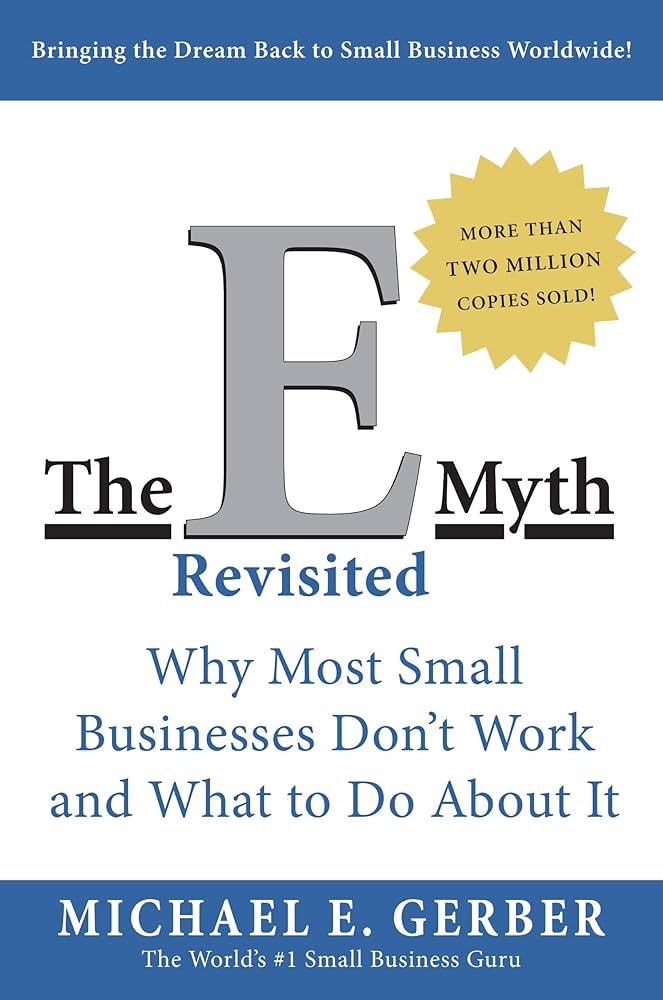
Read more: The $10 Business LessonMichael Gerber author of the famous book – "The E-Myth Revisited: Why Most Small Businesses Don't Work and What to Do About It” makes a fundamental observation regarding the majority of small business owners.
He asserts that most small to medium sized business owners are technicians at heart and started their business while having an "entrepreneurial seizure”. They're excellent technically so think they'll be equally good at running a business.
And sadly, as business statistics show – most are completely wrong and go out of business.
Why? Because they either don't understand or haven't taken the time to master how to effectively market and sell (or employ people who can).
We saw an excellent example of this the other day…
Jurg Kirchhofer is one of the most controversial men in Interlaken, Switzerland. One of the region’s most successful business owners, his name evokes passionate diatribes whenever it comes up.
Being naturally curious, I wondered why? What is it about this chap that causes so much comment?
First some background on the family business.
In 1944, Fritz Kirchhofer, a master watchmaker, opened a jewellery and watchmaking store in Interlaken. In a few years he expanded and started his own watch factory as well as opening another store.
Fritz realised early on that he needed to do two things to prosper in this business. First, offer a wide selection of watch brands to the tourists who flocked to the region, and second, offer unrivalled after sales service.
I’m not sure when Fritz passed the business onto his children, but the real expansion occurred when son, Jurg took over.
Read more: You can't make an omlette without breaking eggs!The pendulum is swinging back. Online Social Media has not taken over the world – in fact significant numbers of people are deleting their Facebook and other social media accounts in favour of spending more face to face relationship time.
And while shopping over the internet has its uses, department stores aren’t likely to go out of business anytime soon. The majority of us still like to see, feel and touch items before buying them. You can’t tell how comfortable a pair of shoes really is by seeing a picture!
All of which leads me to topic of conversation I had a few weeks ago.
A member of the group proclaimed the internet was going to kill off many businesses – one of the main ones being Travel Agents.
“I predict that Flight Centre will no longer exist in 5 years!”, he loudly stated.
Read more: The pendulum is swinging back
Well, Christmas is over. Hope you had a good one with people you enjoy spending time with and if you did eat and drink too much, the effects have worn off. *Smile*
We’re in that interesting period between Christmas and New Year, a dead zone for many businesses (unless you’re running post-Christmas sales) and a great time to reflect on what the year’s been like and what you want to achieve next year.
Anyway, you’ve probably got tons of emails from people telling you, you need to plan etc., so I’m not going to add to the clutter, but thought I’d continue with some stories of what we’ve been experiencing here in Switzerland with regard to service.
One thing that really stands out is how polite people are in shops. No matter what the size – be it a small retailer or a big chain, as you walk in and around, EVERY shop assistant will greet you and acknowledge your presence. And you can actually find someone to help you within 30 seconds. Try doing that in your average Target or Myer store!
However, not everything is rosy. Believe it not, a lot of major services and many small shops close over lunch so people can go home to eat.
So you can’t go to your local bank branch, post office or government utility during lunchtime! Takes a bit of getting used to if you’re not from here. In a way it’s like Australia was 30-40 years ago before we had 7 day a week shopping and the shops closed at 12pm on Saturdays – with a mad rush to get your grocery shopping done.
Had a good reminder of how an otherwise excellent business can be let down by one department the other night.
Barbara’s Mom took us to another well-known local restaurant for my Birthday. The restaurant is part of one of the oldest hotels here in Interlaken, still run by the third generation of the family (something that’s becoming rarer and rarer as children no longer want to take over from their parents).
Renowned for its Kitchen, the food was excellent. However they were let down by the service. It’s not as if the service was bad. Nothing that really stood out that you could put a finger on. It just didn’t match the food. And it detracted from the “experience”.
Which just lends credence to the fact you need to make sure every aspect of your business performs to the same level and that you’re not being let down by one area which detracts from the whole.
When asked if we enjoyed the evening and everything was fine, Barbara did mention a couple of the glitches, which they apologised for and explained they’d had a couple of issues in the kitchen.
But how many times have we been somewhere and when asked, don’t say anything and just leave, never to come back?
Which is what most people do. We know things that could be improved, but we don’t say anything. Often because we feel the other party doesn’t want to know or would get defensive. And often the timing and appropriateness of giving feedback doesn’t feel right.
Every business has blind spots. Stuff that could be improved if only you knew there was a problem. Stuff that detracts from the excellent experience you want to give your clients.
The question is, are you courageous enough to take steps to find out? After all you might find some unpalatable truths.
If you are, there are a couple of ways to go about it.
One is commission a customer survey from us where we talk to some of your customers and find out the good, the bad and the ugly. You’ll get a great deal of feedback and ways to improve.
The other is to use a “blind shopper”. No, not literally! A blind shopper acts like a customer and gives you a report on the whole experience from go to woe. And yes, it is something we can arrange for you. Give me a call on (02) 9499-7958 and we can get started.
Finally, have a wonderful end of year celebration and Barbara and I wish you the very best for 2012.
Rashid.
First of all Barbara and I would like to say a big thank you to all of you who read this newsletter every week. Your comments and encouragement are what keeps us going.
We certainly “live in interesting times” and hopefully you fell into the positive side of the Chinese “curse” and business has
been good for you.
I’m writing this looking out on a snow covered landscape, a magical fairyland.
It’s a few days to Christmas. The days (here in Interlaken, Switzerland) are short and the temperature outside is a chilly minus 4 degrees C.
Barbara and I are spending time with family and friends as well as taking time out for reflection and renewal, (there’s nothing quite like sitting in a warm house with a roaring fire) while it snows outside. (I couldn’t resist putting in a couple of snow snaps!)
A friend of ours asked me how we could do a series of newsletters from a White Christmas perspective, and the difference between European and Australian marketing.
Not sure about the White Christmas bit, but here’s my take on what we can learn from living in a small village with a permanent population of around 6,000 (which swells to over 60,000 in the summer tourist season and even hit 200,000 with the International Yodelling Festival in 2011).
The hotels and most businesses cater to the tourists. The only problem being business can drop dramatically in winter, so you have to make all your money during the summer months.
Unless you’re smart and learned you need to cater to the locals, who are permanently there and who need your services on an ongoing basis.
A great example of which is a local Italian restaurant which learned to do just that. Rather be dependent on the fickle tourist trade, they built up a reputation for quality and value and deliberately targeted the local population and surrounds (about 25,000 people).
We were there the other night and they had 2 groups of locals booked in – about 25 people. And while things have slowed down due to the economic uncertainty in Europe, they are still going strong.
They know their regular customers by name and while everyone else at our table got German language menus, they remembered to give me an English one. That’s attention to detail.
And here’s an example from this afternoon. Barbara was looking for a gift for her Father’s partner. The shop owner knows both Barbara and her Father’s partner, so gave suggestions as to what she’d like.
Nothing quite like knowing your customers.
And this owner beats the competition by running sales before anyone else in the area does, writes to all her clients informing them the sale will be on – before it happens, giving them first dib’s on what’s going to be on special.
It’s all about looking after your clients and nurturing your relationships.
Remember, Interlaken’s a small place. Wherever you go you’re likely to meet someone you know. Someone you or one of your family members went to school with. Someone you’ve worked with before, knows your parents etc. You can run, but you can’t hide.
You can’t afford to burn bridges and piss off the local population if you need them to survive.
And it’s the same with your market.
To be successful you need to develop and nurture long term relationships and be recognised for consistently delivering quality and value.
If you sell in a small market segment (think specific industry like mining, financial planning etc.), chances are everyone will know everyone else. And nothing travels faster than a bad rap.
It takes time and consistent effort to build up trust and credibility. But the rewards are absolutely worth it – and frankly if that wasn’t your aim, why would you be in business anyway?
And last but certainly not least, may we wish you the compliments of the season – no matter whether you personally celebrate Christmas or not. If you are having a break – stay safe, and we’ll see you next year.
All the very best,
Barbara & Rashid.
Carmelina and Mick Stillone own a high end “Audio Boutique” on the Northern Beaches of Sydney. They’ve been in the hi-fi and home theatre business for over 30 years and provide excellent service.
A couple of weeks ago, I got this email from Carmelina…
“Hi Rashid,
I wanted to share something with you that we witnessed last week when we noticed a group of kids aged around 7-8 going around into stores in Mona Vale. Mick happened to notice and listened in and the point of the excursion was to teach kids how to ask for discounts and barter with small retailers. The teacher told the kids that you can’t do this in Coles and Woolies but certain stores you can, especially small speciality stores.
Mick was a little shocked and had to contain himself from spoiling the excursion for the teacher and kids. I would like to write to the education department and explain that we run a professional serviced based business and what right does the education system have to educate our kids about asking for a discount. All we hear about on the news is where to buy the cheapest items and how to save money.
I wanted to share this with you so you know what retailers have to deal with on a daily basis.”
It’s the age of the discount. Just about everywhere you look shops are discounting their wares by 50% - 70%, offering 2 for 1 specials… anything to get people into the store where they’ll hopefully buy something.
Read more: What? You want a discount???Would you spend upwards of $3,000,000 (yes, that’s 3 million dollars) to run one 30 second TV advertisement?
Believe it or not, that’s just what a bunch of companies will pay to run a single 30 second promotion in the next NFL Super Bowl in February. And that doesn’t include the production costs!
The ads will be clever and funny (it’s just expected). The ad agencies will get awards. The CEO’s and boards of the advertising businesses will revel in the glory and feel really good.
But will it bring in any business? How much bang for your 3,000,000 bucks do you get?
If past history is anything to go by, not very much.
Here are some sobering facts.
The vast majority of viewers will laugh and enjoy the ad. They might remember the ad, but won’t remember what was actually being advertised, who the company was or even what the product did.
Bummer… All that money down the drain and not a new customer in sight.
So why do these companies go down this path? They fall for a lie.
Read more: The biggest marketing lieI was training a bunch of sales people how to sell capital equipment
The role play was well underway.
We’d delved into the issues the prospect had, drilled right down into the nitty gritty. Got all the problems out on the table. Figured out what was keeping him up at night. All his frustrations with his current equipment and supplier.
We’d looked at the implications of not fixing the issues. What would happen if he kept the status quo.
He was non-committal. Couldn’t really justify to himself why he should spend the money upgrading. After all, things were working, albeit not as well as they could, but the cost of upgrading (to his mind) outweighed any benefits.
And this is where most sales training would tell you to walk away. There is no sale as there appears to be no need or problem to be solved. Which is completely wrong because this is only half the story.
But first, some human psychology. Bear with me – it’s important.
We all move towards things we want or away from what we don’t want. Think of the carrot and the stick. If someone has a greater TOWARDS orientation, you can motivate them with rewards. A more AWAY FROM orientation will be more motivated by the stick or what they don’t want to happen.
Read more: The missing link in SalesWe came upon them by accident while sitting on a flight. They’d advertised in the Virgin Australia Voyeur magazine and caught Barbara’s eye with the range of their products, rock bottom prices and specials.
They were oo.com.au, an online department store which has been around since 2004.
So you may well be thinking, “What’s the big deal – why are you writing about this?”
Simply put, these guys are an excellent example of direct marketing, customer service and follow up.
Here’s why…
After Barbara saw the ad, all those years ago, she checked out their website and joined their newsletter list. From then on she’s received an email EVERY DAY with a list of specials, 24 hour deals and general items in their catalogue. They break up the formats so they don’t get boring.
And you know what? Barbara looks at the email every day to see what they’re selling.
Read more: Automation - The Key To More SalesI’ve said it time and time again. Regularly keeping in touch with your customers will dramatically increase your revenue and profit.
But if you’re in a retail environment which is mainly transactional, how could you go about capturing your customer’s details?
The simple solution is to offer a loyalty program and have your customers give you their details. More and more we’re seeing shops do just this. And it’s paying dividends.
Here’s a personal example…
A few weeks ago we bought a set of new lightweight luggage for Barbara. The stuff was on sale and we got a pretty good deal at 40% off.
As we were paying, they asked if we were part of their loyalty club. We weren’t. Well it was free to join and we’d get a $5voucher for every $50 spent, plus extra discounts and notification of sales.
So we did.
Read more: The real benefits of a loyalty program
A lot of our work involves fixing an organisation’s marketing and sales processes so they stop wasting time and resources on the wrong prospects while converting the right ones into more profitable business.
A fundamental mistake we constantly see is confusing activity with outcome…
Seeing lots of unqualified prospects who have no intention or ability to buy might tick your activity boxes, but will never lead to a sale – the ultimate outcome you really want.
It’s a trap I’ve seen countless sales managers and sales people fall into.
Many sales managers set appointment goals for their staff. i.e. you need to see X number of people a day, week, month etc. Never mind what the quality of the call is and whether the person was really a prospect or just a tyre kicker.
And the sales people who work for them comply by rushing out to anyone who will meet with them because they're so excited to have found a willing prospect. They make no effort to actually qualify them first and waste precious time meeting people who aren’t likely to be a good fit.
And both sides play the game.
Read more: A Fundamental Sales MistakeRichard Branson does it. Donald Trump does it. The late Steve Jobs did it.
Every one of them has created an empire from nothing, boldly going where others feared to tread. Each struck out in their own direction and blasted their way into our consciousness. And none of them worried about what other people (especially their competition) thought of them.
Boldness has its own genius. Yes, people will try and copy you. It’s inevitable. But worrying about how your competition is going to react and allowing it to stop you is foolish at best and a total waste of your energy.
So what’s this got to do with you?
Well, if you’re like Branson, Trump and Jobs, nothing. If not, everything!
Read more: Richard Branson does it. Donald Trump does it. The late Steve Jobs did it.It was the best of times. It's now the worst of times and they were wondering if the business was viable any more.
Doing a strategy session the other day. The business owner has run a string of successful enterprises over the years and is one smart lady. Her current business is in the beauty industry in a suburb on Sydney's lower north shore.
And until a few months ago, business was booming. They were top of class in their category.
But things change. Nothing is forever and suddenly they found themselves doing half their normal weekly turnover. Things were not looking good.
And that's the scenario they presented to me. Help – What should we be doing?
In marketing your services, what other people say about you is infinitely more important that what you say about yourself.
Let’s face it. Today, anyone can put up a website and claim anything. Looking at a website, you’d have no way of knowing if it was a one person, fly by night operation or an established company which produces results for their clients.
Or is there?
Before I answer that, let’s discuss some basic principles.
People decide to do business with you based on trust. They want to know that whatever you’re delivering is going to work as expected, and if something goes wrong, you’ll fix it.
Now if you’re a big brand or well-known retailer, you’ve built up a trust factor over the years, so people have confidence in your products. Mind you, in today’s web connected world it’s very easy to have negative press spread like wildfire, but that’s a topic for another day.
But if you’re not a household name, what’s the best way of rapidly gaining trust from your prospects?
Read more: Are you believable?One of the biggest mistakes many sales people make is fishing in too small a pond.
They have a small set of prospects that they keep going back to in the hope that one day they’ll become clients. And in every sales meeting, when asked, they’ll tell you that the prospect is “close” to coming on board.
Sound familiar? I know I’ve been guilty of it. But it isn’t a path to success.
So why does this happen and what can you do to prevent it?
Most of the time it comes down to two things. Hope and fear.
Prospecting is difficult for many salespeople. The very thought of making cold calls and suffering rejection strikes fear into their hearts. And it’s amazing how seemingly heavy a small plastic instrument (the phone) becomes.
So when you do get through to someone and they express interest, there’s a natural tendency to keep hounding them, hoping you’ll get them over the line.
Your thought processes go along the lines of “If I just keep calling, eventually they’ll buy”.
Read more: Fishing in too small a pond?It takes courage to lead. To stand for something and be counted.
Yes, it may be risky. You may be shot down in flames. But what’s the alternative? Be an also ran?
Let’s face it. No one in an organisation wants to make a wrong decision and then be left holding the bag and looking bad.
Mediocrity is everywhere. “Me too” ism abounds. If you want to be successful, you need to break away from the crowd and take a stand.
And more so, you need to encourage the people you work with to do the same, without them fearing being reprimanded for trying something new and shock, horror, failing!
One of the greatest innovators of our time, 3M was renowned for creating new products due to their ” Bootlegging” policy.
Read more: Dare to be differentOne of the biggest growth areas in online advertising are the Daily Deals sites. You’re probably familiar with some of them – Living Social, Groupon, Spreet, OO.com – the list goes on.
Maybe you’ve bought something from them? I know we have.
So why do they work and if you’re thinking of using one to promote your products or services, what are some of the traps you could fall into…
Let’s start with why they work.
In effect, the daily deals are interruptive advertising that you’ve opted into receiving.
The subject lines immediately tell you what’s on offer – so it’s easy to decide whether to open the email or delete it.
And if it’s something that looks interesting, you’re likely to check it out and go, “Wouldn’t mind that – and it’s at a really good price – so why not!”. After all, let’s face it, we all love a deal.
So from a consumer’s point of view – great value.
But if you’re the merchant, is it such a fantastic deal for you?
Read more: Anyone for a "Daily Deal"?The more things change, the more they are the same!
There is a lot of hype about how “Social Media” such as Facebook, LinkedIn and every other variant is changing the way we do business.
It’s coming to the point where you feel inadequate if you don’t have hundreds of friends on Facebook, LinkedIn and now, Google+!
True, social media allows you to reach out to people you ordinarily might never come across – and often reduces the “six degrees of separation” down to one or two.
However, it’s what you do after you connect that really hasn’t changed. People are people and it’s relationships, not money that makes the world go round.
And that’s where many a person comes unstuck in their online social efforts.
In the mad frenzy of continually inviting people to “connect”, I think one thing has been forgotten.
Read more: Why connections alone won’t bring you successYou want to grow your business. You set your goals. Define your strategy. Work out your tactics and start to implement.
But how do you know you're on the right track? The simple answer is "feedback”.
As they say, "Feedback is the breakfast of champions”.
So it's your ability to ask for feedback, not get bent out of shape when you hear stuff that you don't like and then correct things, that will be a great determiner of your success.
And of course, feedback is not just about finding out what's going wrong. It's equally about finding out what you're doing well and can give you great ideas for innovation.
Over the last couple of weeks Barbara and I spent hours interviewing dealers of a particular client to find out how they (our client) could improve their service and get the dealers to sell more.
It's a highly competitive big ticket item market these guys play in so as part of our consulting services we help them look for any advantage they can get.
Read more: "...And the truth will set you free"I needed a haircut – badly. But I'd been putting it off, not because I couldn't make the time, but for another reason – which I'll get to.
But first, some back story…
I've been going to the same salon for about 5 years. They're in the local shopping centre and the lady who cut my hair always did a good job. It came down to thoroughness and attention to detail.
Yes, they cost twice as much as the local barber, but I was happy to pay.
Then she decided to go travelling and left. Bummer.
So I tried a couple of other stylists in the salon, and found one who did almost as good a job.
However, over time, I noticed small inconsistencies creeping into their delivery.
Ladies (and some of you gentlemen) will know salons always want to wash your hair before doing anything.
Read more: Why I sacked my hairdresser!We received an inspired piece of marketing the other day…
Barbara and I love going to all sorts of different concerts – be they classical music, musicals or other artists.
So when a 30 page glossy "Music Is My Passion” 2012 concert package from the Sydney Symphony arrived the other day, some brilliant marketing unfolded.
Starting with an inside cover with a full picture of the orchestra standing and smiling outside the opera house – with a caption "Welcome”. It was just a happy, welcoming shot which certainly made me want to flick through the rest of the material.
Rather than list a whole smorgasbord of concerts which makes it difficult to choose (think café with dozens of choices – you sit there agonising over what to eat), the Symphony put together "5 great packages from which to choose”.
Ranging from packages of 6, 5 or 4 concerts of different types and days of the week, you could subscribe and save a significant amount over buying tickets for a single concert.
In addition, the Symphony is offering 3 extra Gala Special Events – which you can add onto your subscription and save, 10%, 15% or 20% on these depending on how many you choose.
And that's where the genius was - in the packaging.
Read more: "Music is my passion" - Lessons from the Sydney SymphonyThere are two types of people. Those that are proactive and take action no matter what the circumstances and those that make excuses.
The former will be successful no matter what the odds while the latter will blame everything and everybody but themselves. It's the Government's fault, the economy is bad, people aren't spending, I can't find work…. You name it, they have an excuse.
Martha, a close friend of ours, related just such an example the other day. It provides some interesting lessons.
Martha owned a house in Bellingen, a small town up near Coffs Harbour in NSW.
She's had it for years, but it had been untenanted since last October.
Wanting to sell it, she contacted the Real Estate agent she'd originally bought it through.
They'd changed hands, but she went with the new guy, Nathan.
The property was in prime location, right in the middle of town, so Nathan thought they'd get $485K for it.
As the months went by, and the property sat on the market, Nathan kept making noises about how bad things were and suggested dropping the price down to $449K then $429K.
"I'm desperate to sell… Is there anything I can do… anything that needs fixing?” "No, everything's fine. It's in such a good position, it'll sell”.
Frustrated, Martha found another agent, Claire who said, "Oh what a cute cottage, it's so sweet. I can sell this for you.”
Read more: Which type of person are you?Never say never!
In sales, a common objection is "I'm happy with my current supplier”. And when confronted with this, most sales people give up and go fish in another pond.
And that can be a big mistake because it's not the early bird, but the persistent one that ultimately gets the worm!
Here’s an example from the other day…
It's been years since I was a Telstra customer. After a series of major debacles about 7 years ago when they totally stuffed up our phone and internet connections, we moved all our services to other providers.
Over the years we've periodically got calls from a Telstra call centre asking us to move back to them.
My response was always the same… "Not in a million years – especially after what you did before!"
And so it was the other month.
Read more: I swore I'd never do it...It always amazes me that the first thing to be jettisoned in difficult times is training. When times are tough, you need to be sharper, faster and better than your competition – or you’ll be eaten for lunch!
Which brings me to today’s story… Unfortunately, a rather common occurrence when dealing with certain types of salespeople.
You want a new car – and walk into the showroom…
You stand there expectantly and eventually realise you’re being ignored by the salesmen who all seem to be busily engrossed in their paperwork.
Frustrated, you think… "Okay, they’re ignoring me… so I’ll just walk around looking at models”
You walk around the shining new cars, open the doors and look inside. Maybe you even get in to see how they feel.
Read more: The case of the vomiting SalesmanI made a big mistake the other day. It wasted a significant amount of my time, could have cost me a deal and I was pretty angry with myself.
So why do you care? Well, you could be inadvertently doing exactly the same thing.
Let me tell you the story. There are some valuable lessons for any of you involved in any form of negotiations, marketing and selling.
It all started a couple of months ago.
As a reader of this newsletter, you know I offer a number of free white papers.
Someone ordered our “Official Guide to Maximising Your Trade Show Returns” report .
Once someone orders any of our material, they get a series of automatic follow up emails – which go into more depth on the topic and essentially keep our name in front of them.
I also followed up with a phone call to touch base.
Read more: Why I was an Idiot...Let me tell you a story… It’s about how Greg decided to buy a new TV.
Now you’re probably thinking, “Why would I want to know…” but bear with me – there are some valuable sales lessons here which you could apply to your business.
But first, I’d like to go back in time. Back 10 years or so to when I was delivering a sales training to a bunch of folks.
A participant, Damian was pretending to buy a new home theatre system and I was the shop salesperson. Our systems ranged from a few hundred dollars to about $10,000 a pop.
I wanted to get a feel for what he was looking for so I could steer him in the “right direction”.
So after the usual pleasantries, I asked Damian what he was looking for in a home theatre system, what was important to him and why, and finally how much he wanted to spend… his budget.
His reasons are not important for this story, but his budget is… “About $3,000” he replied.
Read more: The question you should NEVER ask!Times are tough. We live in a two speed economy. Retail is really hurting. The carbon tax will push up prices and no amount of compensation is likely to change people’s perceptions regarding the cost of living going up.
So you’d think that given the sad state of consumer confidence, organisations would want to up skill their sales staff to give them the best chance of separating consumers from their money. After all, we still need to buy stuff – it’s just a question of from whom…
Sadly, this doesn’t appear to be happening too often. And frankly, both parties miss out. The potential buyer misses out on something that they really want and the seller loses a sale and often creates a long lasting bad impression.
Mind you, some companies get lucky and make a sale in spite of bad salesmanship and lousy customer service.
Here’s an example from the other day.
Read more: "Is that all?"If there is one thing I’ve learned over the years it’s you have to keep your eye on the ball!
Which ball? The one that brings in customers and makes sales. Everything else is a distraction.
Time and time again I’ve seen organisations get caught up in other activities, lose focus and then have to scramble to make their numbers.
Now I’m not saying it’s easy to keep focused. There are a multitude of things that can come in the way from staff issues to moving premises to production headaches. And it’s difficult to juggle all the balls and keep the wheels turning.
But nothing, repeat nothing is more important that making sales and bringing in the money. Because consistent cash flow can solve just about any problem.
One of our clients has experienced just this.
Last year they were the second highest performing subsidiary of an European multi-national. Sales were good. Their dealer network performed and brought in the bulk of their business. Head office was happy.
Then a series of events nearly brought all this undone.
Read more: A force to be reckoned with!Fancy some pickled Baltic herring? How about some Pied de Porc Farci Grillé or grilled pig’s trotters? No?
Relax… while you don’t have to sample these delights, there are lots of lessons to be learned from two of Europe’s most successful restaurants.
This is how the story begins…
In 1880 Leonard Lipp packed his bags and moved from Alsace to Paris. Having had the good fortune to be born French, he understood what made good food and interestingly enough… was an expert with Sauerkraut and Beer.
Strange combination, I know… however, being an entrepreneurial fellow, Leonard thought he could make a living combining these talents. And the Brasserie Lipp was born.
Starting from very humble beginnings, Leonard created a template for French Brasseries which are copied across the globe.
Read more: Pickeled Baltic Herring, Anyone?Be careful what you wish for… it may not be what you really want.
Recently someone proudly told me she got XX hits to her new website and was really pleased that all the money she’d spent on SEO were getting her visitors. She then proceeded to ask me how many I got.
Wrong question and frankly the wrong metric which brought home a crucial point. “Traffic is vanity… conversion is sanity”. In effect, she was focusing on the wrong thing.
Visitors alone don’t make you money. Visitors converting into clients spending money do.
Unfortunately, it’s a point missed by many a business when it comes to any form of lead generation.
You can be in a high traffic area and have lots of people come into your shop or website, but if they’re “just looking”, and walk out, what’s the point?
Read more: Be careful what you wish for...Over the years, I’ve met people trying to flog all sorts of products and services. Some with big dreams of world domination thinking people would beat a path to their door.
I think one of the wackiest was a coaching program, “Healing through sex” – and yes, I’m serious. Mind you this one didn’t really get off the ground… err, bed!
Regardless of what you’re selling, there are three main factors which will determine your success (or lack thereof).
The late, great copywriter Gary Halbert once said the most important factor in marketing anything was to have a “starving crowd”. People who absolutely wanted what you had to offer and who would beat a path to your door.
But in my opinion, this only tells part of the story.
Read more: Can you get to them?A great many businesses lose sales because they neglect one critical aspect with dealing with prospects… The follow up.
And by follow up, I mean picking up the phone and actually talking to prospects!
Here’s a real example I recently encountered.
The business places expensive advertisements for a franchise opportunity in newspapers. The ads cost upwards of $5,000 each and asks prospects to send in for more information – which they duly receive.
Part of the package asks them to fill out a prospectus if they’re interested in having a meeting to discuss the franchise opportunity.
Just about none of the prospects send anything back. And that’s where it stops.
The franchise owner’s attitude is, “Forget them – they’re not interested. Move on”.
And that’s a huge mistake. These people were interested in something the business had to offer. Maybe some of them are spurious enquiries, but a small percentage could be good quality prospects who just aren’t ready yet.
So what should the business be doing instead?
What are you willing to do to get a client?
Thousands of books have been written on selling. After all, it’s the oldest profession! (And no, the other one isn’t – they first had to “market and sell” themselves.
And these books talk about one of the biggest barriers to a sale being a lack of trust.
But I think there’s actually something more significant that comes first, and that’s fear.
Fear that you’ll make the wrong decision. Fear that you won’t like the product or service. Fear that it won’t work and you’ll do your dough. Fear that should you change your mind for any reason (and buyer’s remorse is a very real thing), you won’t be able to get your money back.
So if you’re selling something, how could you combat this? How could you effectively remove the fear barrier to making a sale?
There are two main methods.
Read more: Removing your customers's fears...The scream pierced the house! Next thing I knew, Barbara rushed into the house telling me to go look at what was in the back yard.
What on earth was going on?
Some of you will know that while we live in the middle of suburbia, we back onto National Park. So we get lots of wildlife including echidnas, our own “pet” wallaby complete with joeys, brush turkeys and huge amounts of bird life.
But in the almost 8 years of being here, we’d never seen a snake. Until a couple of months ago!
Barbara was out the back hanging up some washing and noticed some of the wood holding bird netting in place had been moved.
She automatically reached down to move it back, did so, and that’s when I heard the scream! She came rushing back and said there was a snake down there and refused to go back. Well, to say she’s not fond of the critters is putting it mildly.
So yours truly went down to have a look and sure enough there was what I assumed to be a green tree snake, firmly entangled in the netting.
Read more: The scream pierced the house...Had a phone call the other day that really annoyed me. It was a classic example of what not to do if you’re a supplier trying to get more business.
The phone rang around midday. It was a nice sounding young lady from a property investment group, offering me a free copy of a property investment magazine.
She asked whether I was interested in property investment. Then told me they were giving away copies of the magazine (which cost $9.95 in the shops) as a way of raising their profile and in the hope that I would “remember them” when buying my next property.
So far so good. I told her I’d be happy to receive it.
Then came the jarring note.
Read more: The REALLY annoyed me!Do you want to sell more but are frustrated that people aren’t responding to your overtures? You feel you have a great product or service, and can’t understand why people aren’t buying?
Have you ever watched an old movie where the Englishman abroad, trying to be understood, gets more and more frustrated and shouts louder and louder at the hapless local?
We laugh because we know it’s absurd. Obviously volume doesn’t equate to understanding. The local isn’t deaf or stupid. Just doesn’t speak your language.
A lot of marketing activity falls into exactly this trap.
Read more: Discovering the truth...One of the most powerful influencers in your marketing arsenal is social proof.
Why? Because whether it’s a recommendation for a movie, book, or restaurant, all of us to a greater or lesser extent are influenced by other people’s opinions.
So why would it be any different when it comes to people considering buying your products or working with you?
That’s why getting effective testimonials, case studies and recommendations from your clients are so important. Testimonials demonstrate to your prospects that there are other people, just like them, using your products and getting great results. Which infers that they’ll get great results too. All of which leads to an easier sale for you.
However, many businesses make 3 critical mistakes when it comes to getting effective testimonials, and miss out on the power they can bestow to their business.
I’ll start with the mistakes and then give you a fool proof formula you can use to get effective testimonials that will resonate with your prospects and get them to sit up and take notice.
Read more: The critical importance of social proofIn marketing, consistency is king.
Both consistency of the message as well as consistently being in front of your audience.
It works like this…
Through your initial marketing efforts, people will learn that that you exist. With repeated exposure, they'll learn that you are stable. With even more repeated exposure, they'll assume you're successful.
And the last few months have really rammed home this point for me personally.
We’ve had a large influx of new clients through this newsletter you’re reading.
And when I’ve asked them why they chose us, there were two main reasons.
“You are consistent” and “You provide great value in the stuff you write”. Which ultimately led them to believing we can help them achieve better business results.
The interesting thing is that none of these sales were “instant”.
A new client commented that he’d meant to call for about 9 months but other stuff kept getting in the way. Another was on our list since November 2008. And another had been receiving our stuff for 3 years before taking action – when the time was right.
Just brings home the point that people will buy when they’re ready – and perceive a compelling need to take action. Your job is to be there when this happens.
So what’s the mechanism at play here and how could you replicate it?
It all start with the Biblical saying, “As you sow so shall you reap”.
You have to sow “knowledge” by educating your audience, being free with your advice and giving of yourself. Then water and fertilise by being “reliable”. And eventually harvest “trust”. All the while remembering that there’s always a time delay between sowing and reaping.
Now I should point out there are many ways of doing this.
Like us, you can write articles on your chosen topic and send them out regularly. (If you hate writing and/or don’t have the time, we can do it for you…)
And you can attend networking functions, give talks, run seminars, be interviews on the radio/TV, run teleseminars and webinars, engage in social media such as Linkedin and Facebook etc., etc.
(Once again, we can help you with creating and presenting talks, your elevator pitch for networking and even how to run teleseminars and webinars)
However doing something ad-hoc is a complete waste of time.
Take a common issue with networking…
I’ve been involved with a number of groups over the years. And I’d often hear from casual attendees that the group wasn’t working for them – they weren’t getting any business.
The reason was simple. They didn’t turn up regularly. They never put up their hands to volunteer to help the group growing and running. And they “expected” that people would come to them and want to give them their business!
It just doesn’t work that way.
No matter what form of marketing activity you undertake, there are no shortcuts! The key is to be consistent, take a leadership position and make yourself an authority on your subject – someone who commands respect in your chosen field.
That way, over time you will get all the business you want.
Rashid.
Barbara wanted a new mobile phone! She’d been talking about getting a new phone for a while, but neither of us could justify buying new ones when we had perfectly workable phones.
Then case of her old Nokia had cracked at the back, which irritated her and was the catalyst for looking for a new phone “with a proper QWERTY keypad”.
So Sunday a week ago, we went around a major shopping centre so I could “do some research” and see what was available.
We’re both with Vodafone – and Barbara used a pre-paid, and I wanted to buy an unlocked phone and not lock into a contract.
Why? You might well laugh, but I wanted the option of using a Telstra Simcard in the phone for when we were travelling the Australian countryside and Vodafone didn’t have coverage!
Read more: Uncovering the hidden objectionYou’ve got a wonderful product. You’ve created a great looking marketing promotion. You send it out and expect your phone will start ringing. But it doesn’t. Frustrated, you think it’s not working, so give up or change it. Sound familiar?
So what’s going wrong?
When selling, one of the biggest mistakes you can make is not targeting the decision maker.
The person who stands to gain by taking action or lose through inaction. The person with his balls on the line. And the person who controls the cheque book!
There are five things we drill into our clients over and over again.
You must…
Read more: The 5 things you MUST do...Do you compete in a busy marketplace? Have lots of competitors all basically offering the same service?
If so, how do you stand out from the competition? Why would someone searching initially choose to talk to you over everyone else?
The short answer is by succinctly articulating your Unique Selling Proposition or USP.
So what’s a USP?
Your USP is a positioning statement that clearly illustrates why your business should be chosen over the competition.
Don’t have one yet? You can use the following ideas to craft yours.
A USP needs to tap into the fears, frustrations, major concerns and desires of your customer base while removing the risk associated with a buying decision on their part.
Read more: What's your USP?P.T. Barnum once made a very insightful observation.
“A terrible thing happens when you stop marketing…. NOTHING!”
A lesson the mighty McDonalds knows only too well. They know if they stop advertising for even one day, sales fall.
While buying McDonalds is often an impulse buy – I’m feeling hungry, there’s one right there, most sales take longer to consummate.
Here are some vital statistics that should make any salesperson sit up and take notice.
Your target audience can be broken into different segments based on interest level and timing. So whether you’re cold calling or running an advertisement, take heed.
Read more: Are you missing out on 67% of your sales?No matter what you’re selling, you have to do three things.
Then prospect with a vengeance.
Now that was the traditional view. As a salesperson, you went out and found prospects and created opportunities. And hopefully, Marketing created some brand awareness in the minds of your prospects.
But the world has changed.
To be successful in sales you must now do your own targeted marketing as well.
What do I mean?
Are you creative? Full of ideas, constantly starting projects which you don’t finish?
Watching a video from Seth Godin, author of 13 bestselling books which have been translated
into over 30 languages, brought home a crucial point.
“What you do for a living is not be creative, what you do is ship.”
What does that mean? Simply that we’re all creative and have lots of ideas. But unless those ideas actually manifest into something tangible, that’s all they remain, ideas.
So it’s not about starting. It’s all about finishing. Taking action. Getting a result. And frankly, that’s the only way you’ll ever be successful at anything.
Let’s take your business marketing as an example.
Which camp do you fall into…
Have you ever sent out a mass mail-out and not had the response you hoped for? You sweated over the creative, got the offer together, stuffed envelopes or sent lots of emails and/or FAXes. And then… nothing!
You wonder what went wrong and came to the common conclusion that “direct mail doesn’t work”.
And that couldn’t be further from the truth.
There is a fundamental principle behind any marketing and sales activity.
You have to get the right message to the right person at the right time. Get the first two wrong and you’re dead in the water. The third (the right time) is overcome by continually being in touch, so when the time is right, they take action.
Read more: Why direct mail doesn't workIn business you’re either growing or dying. There is no standing still. If you keep doing what you’ve always done, in the way you’ve always done it, you will be left behind – guaranteed.
So it’s imperative you keep educating yourself, look for new markets and innovative ways to solve their problems.
And most of all, you need to separate yourself from the crowd that are you competitors, so you become a class all your own. That way you can name your price and get it.
Take William and Michelle Kim, our house cleaners.
We first came across them about 7 years ago when they dropped a letter into our letterbox. Not your normal flyer, this letter contained written testimonials with real names and real phone numbers, all extolling their virtues – the foremost being trust and dependability.
Read more: Reinvent Yourself and ProsperWe live in a wired world
Everywhere you look you see people tapping away at iPhones, Blackberries, iPads and a plethora of other communication devices.
Services like Linkedin, Facebook, and Twitter seem to be all the rage and attract more users than the entire populations of some countries.
And while a lot of these services sprang up purely as social connection methods, some are very business focused and incredibly useful marketing and sales tools if used correctly.
So let’s look at how you can use these tools in a sales and marketing capacity.
First a couple of definitions...
Simplistically speaking, traditional marketing is about getting your message out to prospective clients and educating them about your services (with the hope that they’ll come to you). Selling is based on actively targeting prospects and converting them into clients.
And in the old days, these tended to be separate functions and indeed entire departments. Marketers marketed and salespeople sold.
But not any longer.
Your customer has changed and as a result, the lines between marketing and sales have blurred.
Read more: Using Social Media to Increase SalesA lot of sales people lose out on deals because of two things... A bad attitude and sheer laziness.
Here’s a direct example from the weekend...
Had a phone call from my parents the other day. “We’ve just bought a new car” “Oh really? Didn’t realise you were looking” “Well, the deal was so good, we couldn’t refuse”.
It was a great sounding car, with massive safety features, one piece chassis – with no welding, fully adjustable seats (both front and back), easy to get in and out of (especially important for people in their later years), large boot etc. And to top it off a great finance deal.
Only thing was – there were only a couple of cars left in the colour they wanted – one in Perth, the other in Melbourne. So they needed to make a quick decision.
They did... and the salesman at Toyota got the sale.
But at least 3 other dealers missed out. And it wasn’t because my parents didn’t like the cars. They’ve bought Mazda’s for years, but not this time.
Every dealer they visited showed a distinct lack of interest in them when they said they were “just looking”. In fact, my Mother recounted that these salesmen would just walk away and ignore them from then on.
Silly, silly, behaviour. They missed out on a $30,000 sale!
By stark contrast, the Toyota salesperson said, “Not a problem... Let me show you the cars anyway.” And he proceeded to go through the features and more importantly the benefits of the Corolla in great detail. Benefits which my Mother could recite to me chapter and verse!
My parents fell in love with the car, and the rest as they say, is history.
Unfortunately, my parent’s experience with bored, lazy sales people is often the norm – especially in the car industry. I’ve had the same experience many a time and dealers have missed out on sales.
So what lessons can we learn?
First, just because someone says they’re “just looking”, doesn’t mean they won’t buy if you take the trouble to show them what you’ve got.
I’m a prime example of this...
I’m not a good clothes shopper. But there have been times when I’ve walked into a clothes store with Barbara looking for a $20 rugby shirt and walked out with a $800 worth of clothes because the sales person was good – took the trouble to find cuts that worked and got me to try them on.
And second, “not now” doesn’t mean “not ever”. Who knows what might have happened if each car salesperson showed the cars, took down my parent’s details and followed them up with more information, deals etc.
That way, even if they were not ready to buy right them, they could come back when ready.
And finally, the Toyota salesman used one of the most potent sales weapons of all... Scarcity.
The car was an end of model run-out. They genuinely didn’t have any in stock in Sydney. The price was only good for the weekend. And the next model would cost $3,000 more and not have all the features of this one.
Scarcity and urgency sells! We all hate missing out.
Summing up...
The difference between effective and bad sales behaviour is training. If you don’t train you staff in what’s expected and how to effectively deal with prospects, how can you ever hope to get great results?
So if you feel you could be doing better in the sales game, ask about our sales training and coaching programs. Our programs use proven methodologies that consistently covert more business. And when combined with our marketing strategies and copy, the results are exponentially greater.
“I learned a new method & approach to the whole thought process of sales.......not just my way of thinking but being in the clients mind at the same time.
If you're interested in seeing how you can simply gain that competitive advantage, multiply your prospect list & increase your prospect to client ratio then have Rashid & Barbara coach you!
Come in with an open mind & the information you hear, see & feel will blow your existing thoughts away. The best part is putting Rashid's methods into practice. It's actually a whole lot of fun & so simple to implement in your everyday life.
Thank you Rashid & Barbara for your life-changing information.” Adam Halen
Give me a call on (02) 9499-7958 and we can take this further.
One of the greatest risks to your success in business is being perceived as a commodity. And with more and more competition regardless of whatever your product or service is, you run a real risk of becoming just another “me too” in your market.
It becomes impossible to differentiate your business from every other in your field. Your margins get hammered as prospects look for the lowest price and it becomes harder and harder for you to turn a profit.
So why do so many businesses end up looking like commodities and if you’re heading this way, what can you do about it.
There are a number of reasons.
Read more: Are you a commodity?
The other day, a client commented that every time he looked at his computer, it seemed like there was something from me, keeping my name in front of him.
He went on to say that he wanted just such a system for his organisation, so that
his prospects would keep being reminded about his products. And when they were ready to buy, they would contact him.
He reminded me that he’d been on my list for about 3 years, deleting most of my emails without reading them, until one caught his eye and potentially solved a very specific issue he was having.
Which is when he took action.
Read more: Keeping in touchWe bought a Comb Binding Machine from Aldi in January,. It was one of those amazing specials they have every week – for around $49. They even threw in a kit with front and back covers.
Eagerly we took it out of the box and tried our first binding job.
Barbara put the paper in and crunched down the handle... only to find the paper completely ripped. Tried again. Same result.
No matter what we tried, the machine wouldn’t work. Grrrrr.
So Barbara looked up the warranty and called the supplier.
“Not a problem... We’ll send you a new upgraded model”. “Great, do you want us to send you the old one back?” “No, don’t bother...”
No matter what business you’re in, there are likely to be multiple competitors in your area. So why would someone come to you over anyone else? And if you’re a retailer, why would someone even come into your store over going online and getting a cheaper price?
On that note, we had an interesting shopping experience the other day... one I think we can all learn from.
We wanted to buy a friend a birthday present – and settled on a gift voucher from the beauty salon she goes to.
Barbara rang the salon to get the voucher ready for us to pick up. The receptionist asked how much we wanted to spend ($40) and what name the voucher should be made out to.
On hearing the name, she immediately responded... “Could I suggest you make the voucher out for $42 as that will give her a nail infill – which is one of the things she has done on a regular basis”.
Naturally, we agreed.
P.T. Barnum once famously said, “50% of my advertising works – but I just don’t know which 50%”
So why does this happen?
I believe there’re two main reasons.
1) Not segmenting their market correctly
2) Not rigorously tracking where their leads come from and who’s actually turning into buyers.
Let’s look at them in turn.
Segmenting your market means working out exactly who has the problem your solution will fix AND is willing to buy it.
Here’s an example from the other day.
In sales, timing and relevancy is everything.
A prospect will buy when two conditions are met.
What you’re selling will solve their problem AND the timing is right.
The first condition may seem obvious – but many marketers totally miss the second point.
They send out a bunch of letters, faxes, emails and get negligible response. Or they place ads in publications and no one calls. Then thinking it’s not working, never advertise again.
Big mistake.
I’m all for saving a dollar where I can, but a couple of incidents recently caused me to wonder where I was placing my focus and whether I was being penny wise and time (sic) foolish.
Catching a train into the city Monday morning (8:45am – the time is significant), there was a group of people hanging around the ticket office. They wanted to take advantage of the “off-peak” fare – that clicks in at 9am – saving them maybe a couple of dollars. And yes, I’ve been guilty of this too.
Then last Saturday night – going to the movies, I drove around for 10 minutes as I was too early to get the free parking which clicked in at 6pm.
So it got me wondering. Where else was I wasting the one commodity I can’t increase or get back: time, over something that potentially can be made at will: money.
If you’re involved with selling into a corporate market, I guarantee you’ll find it harder to get in the door if…
And this goes for whether you’re phoning them or sending them something in the post or email.
Let’s start with what not to do…
“Hi Mr./Ms. Decision Maker. This is Fred from Super Duper Products.
We specialise in leading-edge inventory applications and have been rated as one of the best applications by Guiness Research.
The reason I’m calling is that I’d like to set up an appointment with you to introduce myself and to tell you more about how we might be able to help your company.
I’ll be in your area in two weeks and was hoping to sit down with you for about a half hour. Please let me know if that will work for you. My number is …”
Yes, this sort of approach still happens! And no busy decision maker with any clout will fall for it.
Contrast that with... (All real clients we’ve helped with their value propositions)
Read more: What's your value proposition...We all have ideas. We could do this. Or we could do that. And most often we end up doing nothing.
So what separates the consistent achievers from the “I’ll get around to it one day” crowd?
They are clear about their goal, take action and correct course as they go along. They surround themselves with experts (mastermind groups, professional coaches etc.) and get external help where necessary.
They believe there is no failure – only feedback.
But above all, high achievers have a system that systematically takes them from Idea to Planning to Preparation to Execution.
Here’s the system in more detail...
One of the most difficult and often terrifying things you need to do in sales is prospecting.
All of a sudden that inanimate object – the telephone, suddenly seems to become a lead weight and impossible to pick up.
I know professional sales people who are terrified of making calls.
Oh, they’re fine once they break the ice and their own fear barriers... it’s the initial approach that gets their palms sweaty, has them making another coffee, reading their email... anything to avoid picking up the phone.
It all comes down to the fear of rejection. We don’t want to be seen as intrusive and be given the cold shoulder.
Read more: Sweaty Palms...It takes 20 years to create something great. To make something into a household name.
Some of you will recall my article on forced continuity – The Holy Grail, where I talked about the Nespresso Coffee System.
Nespresso’s been around for about 20 years and business is booming around the world.
Here in Switzerland, it’s just about a household name – helped in no small part by every effective advertising using the likes of George Clooney (watch his ad below... it’s worth it).
Back in Oz, they’ve just opened another large store in Sydney and it’s pandemonium. People everywhere, tasting and buying coffee.
Now there are a number of competing capsule systems on the market – and I’m sure the coffee’s fine.
Have you ever been stuck in a rut. Doing things the same old way because that’s the way they’ve always been done?
It doesn’t matter what field you’re in – whether cooking or building a business. Innovation comes from experimentation and often necessity.
Had an interesting first hand example of this the other day.
We’re currently staying with Barbara’s sister and hubby in Belgrade.
We were going to have some friends over, and Barbara thought we could contribute by cooking the meal. We knew the “Europeans” couldn’t eat the sort of hot food we do, so decided on a couple of milder Asian and Indian dishes we could basically do blindfolded.
The Indian one takes a number of staple spices. Barbara’s sister had some of them, but not all.
In Sydney we’d have driven to the Indian spice shop and everything would have been easy.
Not so here. Some stuff just isn’t available. We’re talking “normal” stuff like almond meal or slivered almonds. Nor were a couple of the spices.
So we had a choice. Abandon the menu or go with what we had.
All successful organisations understand the importance of providing a great customer experience. They know that without customers who come back and recommend them to others, they’re fighting an uphill battle to survive.
A week ago, I had just such an experience.
I’d settled down into my seat, the doors closed and the plane backed away from the gate.
Singapore Airlines SQ 234 was on its way and I was looking forward to 22 hours in the air flying to Zurich.
Over the years I’ve been on a lot of planes and used a great many airlines and been subjected to varying degrees of service or lack there of.
I’ve been on flights where it was painfully obvious that the passengers were an inconvenience – heaven forbid, we might actually want something. And others where the planes were so old, I thought they were tied together with string.
We judge the airline on their “service”, the food, entertainment systems etc.
The SQ staff impressed me.
And the winner is.... Sydney!
It’s hard to believe it’s 10 years since the start of the 2000 Sydney Olympics – “The best ever games”.
I vividly remember walking around the city, the buzz in the air, happy people everywhere. Going to events where we were met with smiling volunteers in brightly coloured uniforms.
But great as the Olympics were, I believe nothing, but nothing compared to the Paralympics. There was the real triumph of human spirit over diversity.
Ring Ring. Ring Ring. My mobile’s going off. I grab it and look at the Caller ID. “Private Number”. Bad sign – usually a telemarketer.
I answer... “Good morning, Rashid Kotwal”.
Silence – then click, click and suspicion confirmed. A voice that instantly screams “telemarketer” comes on. And no, this one was a local – not from the subcontinent.
“Rasheesh, this is AB from XYZ sports betting company, how are you?”
Rasheesh???? Strike one!
Read more: Telemarketer HellMany business owners are scared of using direct mail. There’s a belief that mail-outs are expensive and don’t return results.
If done incorrectly, and as a one shot, that’s absolutely true.
However, with good copy, a great offer and multiple touches, mail-outs can be very effective.
One of our clients, reported that a 6 step promotion we created for National Manufacturing Week helped him achieve the second highest monthly sales in the history of the company.
He originally came on board due to our relentless use of direct mail (in our case email) over the years.
Read more: Direct Mail Doesn't Work
I’ve often written about how important it is to generate customer loyalty and stickiness. You’ve worked hard to get customers in the door, so it makes good economic sense to delight them so they keep coming back and hopefully refer their friends.
Here’s an excellent example of a company who’s doing it right!
A couple of months ago, our car was due for a major service.
Normally I’d have taken the car to the dealer, left it there, come home, gone back in the evening, waited for them to finish and generally wasted a whole heap of time.
So I thought I’d try something different.
What makes you stand out from the crowd? What makes someone go – “I know just the right person who can help you” when they meet someone who could use your services?
Becoming a specialist in your field is one of the keys to getting more good quality referrals.
By becoming an authority in your area, you gain a reputation for solving a particular type of issue.
People will seek you out with more complex problems. And you can certainly charge far more to solve them.
Here’s a quick story to illustrate the point...
The package arrived in the post the other day. Excitedly, we tore it open to find a beautifully wrapped dark brown box...
One of the holy grails of sales is forced continuity. Imagine for a second selling something once and then forever more having your clients ring you up ordering more and more.
I can hear some of you saying, “I’d never get sucked into something like that...”
Really?
Election campaigns are all about articulating your value proposition. Why should I vote for you. What are you going to do for me?
Watching the current campaign, you can learn a lot about how to (or not) craft business value propositions which hopefully cut through the clutter and get you to make a decision on who to vote for.
Assume for the purposes of this discussion that you’re a swinging voter. i.e. you haven’t decided who you’re going to vote for.
If you’re a client of ours or been to any of our seminars, you’ll hear me banging on about the importance of writing articles, free reports and white papers.
And while most people baulk at having to write, let me tell you why you should.
Articles, free reports and white papers are in my experience, some of the most powerful marketing tools you can use whether you’re a one man band or a large multi-national wanting to get your message out to a specific audience.
Here’s why...
All successful businesses have one thing in common.
They know their target audience intimately. They know what makes them tick, what their problems are and how to solve them. And most importantly, they speak their audience's language.
And this is only possible if they narrow down their focus, allowing them to directly relate to the people who buy from them.
Contrast this with many of the businesses who come to us for marketing, sales and implementation advice.
When asked who their market is - a common answer is "everyone". Buzzzz - wrong answer!
...worth a pound of cure.
What are the similarities between Hurricane Katrina, the BP Oil Spill and potentially your business?
It usually takes a disaster to find out you should have thought about and have proper contingency plans in place.
Now there are a plethora of different sorts of disasters which could befall your business from losing your data in a computer crash, losing key personnel, to your building burning down.
However, that's not my speciality.
Marketing and Sales is.
So let me ask you a few pointed questions.
Driving home on Thursday morning, I had tears in my eyes. I was listening to Kevin Rudd's last speech after being ruthlessly deposed by Julia Gillard.
This is not a political article, about the rights and wrong of how it was done. I'm more interested in the lessons we can, as leaders, learn.
Listening to Kevin, hearing the long pauses, almost sobs, whether you liked the man or not, you couldn't help not being moved by it.
And it's ironic that we learned more about Kevin in his last 15 minute speech than over the whole of his prime ministership.
As a marketing and sales optimisation consultant I'm constantly bringing forward the free line BEFORE talking with prospects.
"Errr, what's the free line?", I hear you ask.
Put simply, I give away a lot of my best ideas for free! Practical ideas on how they can get more leads, convert more prospects into clients and keep them coming back.
So why would I do this?
There are a lot of similarities between building a successful, long term business and marriage.
Let's look at them...
Growing a successful business depends on three things. Acquiring customers, committing them to purchasing and keeping them coming back for more. In short your relationship with your customers will have a profound impact on your business.
Marriage depends on the same things...
Last week I wrote about how you could be missing out on 50% of your potential sales because you don't have an effective follow up system.
As a result, I've had lots of comments from people asking, "How do I follow-up?".
So here are 5 very practical strategies you can implement immediately.
Are you missing out on 50% of your potential sales without even realising it?
I'm willing to bet you are...
Why? Because you don't have an effective follow up system.
Let me explain...
You create some form of lead generation mechanism - be it an advertisement, telemarketing or direct mail.
Prospects call and some buy whatever you're selling. But what about the people who don't buy first off? They may be interested, but not ready to buy for a plethora of reasons.
In most organisations they go into a big black hole - never to be contacted again.
Alex was both exhausted and excited at the same time.
He'd just spent the day finalising his stand at a major tradeshow, and was looking forward to the hoards of people who'd be streaming past the next day.
It was an expensive exercise. By the time he added up the floor space, construction and personnel costs, he'd spent about $15,000, but Alex was sure it would be worth it due to all the new leads he'd be getting.
Walking through two major tradeshows over the last couple of weeks, I met lots of Alex's.
Greg Doyle, chef at
Ordinarily, I'd go, "Who cares" and "So what", but there are a couple of valuable marketing lessons here.
But first, some background…
Pier is a very, very expensive restaurant. With main course prices in the $50+ range, it certainly doesn't classify as your normal neighbourhood eatery.
Read more: Who are you catering to?I am your customer. Ignore me at your peril...
Have you ever walked into a shop, only to be totally ignored by the sales person?
You walk around looking for something and the young guy or girl behind the counter keeps chatting on the phone, chews gum or listens to their ipod - while studiously avoiding acknowledging you.
Frustrated, you walk out! Another lost sale.
"Keep your eye on the ball", shouted the coach to the young tennis player. "You can't hit what you don't focus on".
Simple and critical advice to anyone learning to play a ball sport. You simply won't be successful if you take your eye off the ball.
So if we know this intuitively when playing, why do we so often forget it when in business?
All successful business are built on three pillars. Marketing, Sales and Customer Service.
You have to first get the prospect to the door (marketing). Then over the threshold to becoming a customer (sales) and then keep them coming back with great customer service.
If any one of these pillars is weak, your business will ultimately crumble.
Over the last 10 years we've worked with many business owners in over 35 different industries.
Working with so many people, with different personalities, I've learned that there is one thing, and one thing only that produces results. Taking action… fast and consistently!
It's about never saying, "Yes, but…". It's about embracing new ideas and giving them a fair go.
So I'd like to introduce a star client. Rarely have we come across two people who are so committed to their success and are willing to put into practice everything we suggest. And they're getting the results.
So drum roll please… The winner is…
Read more: And The Winner Is…Have you ever been in a situation where you needed to choose between competing projects?
You could do A, B, or C – but find it difficult to prioritise and choose which one would give you the greatest return on any time, money and energy you expend on it?
You could be a single person business or part of a larger organisation, where you’re competing for resources and need to prove the project is “worthy” and “viable”.
Either way you need a mechanism to choose and prioritise projects. Barbara and I have designed a process which will help get all the facts out into the open so you can make informed decisions.
Read more: How to make better decisionsOver 2,500 years ago, the Buddha was sitting in his ashram surrounded by
students who hung onto his every word while searching for their own enlightenment.
One of these students, a young man, had been coming for years, but never put anything he learned into practice.
One evening, finding the Buddha alone, the young man approached him and asked, "Sir, I've been coming for years and seen a whole range of people. Some of whom have reached the final stages before enlightenment, others have experienced some changes in their lives, but the vast majority, like me, have not changed at all. Why is this so?"
Read more: Walking the PathOnce upon a time in a small village there was a mother with three young sons.
Being a hard working and busy mother, she asked her one of her sons to go to the local milkman and buy a jug of milk.
A little while later, he came back in tears with a sorry tale of woe. He'd stumbled and spilt half the milk and thought he'd really stuffed up. After all, they were a poor family and could ill afford to waste money.
Read more: Confronting Reality
There are times when we all get stuck.
You have a vision or goal you'd love to achieve, but just keep meeting resistance.
You need to sell your ideas, but can't get past "can't", "That's impossible", "You can't do that" or "yeah… but".
And it's not limited to "other people". Maybe you do this to yourself as well. You'd like to achieve something but you can't figure out how. You might think the goal is too large and impossible to achieve, or the financial or emotional risks too great.
Frustrating isn't it!
Read more: The Impossibility QuestionIf life (and business) it pays to have integrity. And by that I mean doing what you say you're going to do. Which, by the way, is just being pragmatic.
We're all driven by self interest. So pragmatism basically means doing what's in your best interest, doing what delivers the results you want, doing what works.
And above all doing what's right. Not morally, but pragmatically. And funnily enough they tend to end up being the same thing.
Read more: Can Pragmatism & Integrity Co-Exist?
What’s the one thing that separates the successful person in any field from the also ran?
Is it luck, education, network or circumstances of birth? Could it be their values, beliefs or attitudes?
Now while many of the things above could influence success, I actually believe none of them matter as much as behaviour.
Oddly enough though, it’s almost never spoken about.
Do you have any low maintenance, easy going clients?
You know the type. They aren’t demanding, pretty amenable, pay their bills on time and you feel they’re happy with your service.
Great clients to have. But woe betide you if you commit the mortal sin of taking them for granted.
Read more: Are you taking your clients for granted?I have a confession to make. As a salesperson, I’ve allowed my emotions to get in the way and walked away from a sale. And this has been a big mistake.
Now there are times when you absolutely should walk away – times like the other day when I was in front of a prospect who was doing everything right.
He had a bunch of marketing strategies in place, was working with other professionals and while I could have convinced him to switch and use us, it just didn’t feel right. I wasn’t going to do anything radically different – so there would be no value add.
Read more: I have a confession to makeIf you live in
The events a year ago caused an outpouring of grief and sympathy. Millions of dollars were donated to the victims.
Read more: Timing is Everything!A couple of weeks ago, I talked about price.
To my surprise, it proved to be one of my most popular articles, EVER. I received lots of comments regarding the practicality of the message and at least one colleague has put up his prices dramatically.
If you want to read the full article, go here…
But to recap…
One of the biggest issues that we find clients struggle with is price. And by that I mean putting it up.
And every time we talk about price, the same objections come up.
Read more: Raising your pricesDid a strategy day with an old client on Monday. Haven’t worked with them since the end of 2004, but they asked us to come back as they’ve just merged with another organisation and needed some focus.
They have some major goals for 2010 and beyond and knew they needed help.
So why am I telling you this?
Working through the day, there were many ‘aha’ moments – and lessons that pertain to any business – dare I say it, even yours! *smile*
Read more: It’s all in your head…It always surprises me when I hear words to the effect – “It’s the silly season… No one does anything… business all shuts down… everyone’s going on holiday… and nothing happens till late January…”
So why are we busier than ever? Our last strategy and focus day for the year is on the 23rd December!
I believe it’s all about attitude. If you buy into the belief of everything shuts down (except retail which hopes to make all their money in the Christmas rush), then this is likely to be your reality.
However, we made the decision to be busy and consistently marketed ourselves coming up to December and it paid off.
And consistency is the key – 2 of the strategy sessions we did came from people who we’ve been in contact with us 6 years and almost 4 years before buying anything.
Just this morning I met with someone who’s been on our list since April 2007 – and this is the first time he’s made contact.
So if you’re not consistently getting the word out about your products and services, you’re missing out. After all even though it’s the silly season – people are still looking for solutions to their problems and if your material turns up at the right time, they’ll buy.
And if you’d like us to help you with effective, tailored methods of getting your phone to ring with qualified propects, give me a call on (02) 9499-7958.
Here’s a question for you…
Are all your customer facing operations aligned? Do you make doing business with you a seamless and pleasant process? Or do you get business in spite of yourself?
We had a recent example of this just yesterday…
Read more: The Tale of the (Almost) Lost Customer...If there’s one thing above all that leads to success it would be the power of persistence.
Last week I wrote about Kurt Fearnley’s persistence in winning race after race and then successfully crawling the Kokoda Track.
Today Barbara had a wonderful reminder of persistence in business.
Let me explain…
Late this afternoon, Barbara got a follow up call from a Wine Society. Now we’ve bought stuff from them before and been very happy with them.
And over the years they’ve kept in contact. We’d get a call from them every few months with an offer.
And there were times we’d buy something, but most times we didn’t.
Read more: The power of persistenceIn business it’s vital to keep on top of your prospect’s and customer’s minds. To keep communicating with them, building a relationship, letting them know that you’re there when they need you.
And when it comes to building relationships there are no short cuts.
It takes time. Time to build up trust. Time for someone to realise you’ll do what you say you’ll do. Time for someone to realise you do look out for and care about them.
The world is full of opportunities. And if you’re in business this can be a very dangerous thing indeed.
Let me explain…
As a business owner, you need to focus. Focus on what brings in the money. And that means knowing exactly what it is you do for your customers and why they pay you.
It means sticking to your knitting and becoming the “go to organisation” for whatever it is you provide.
Read more: Are Opportunities Dangerous?There are two parts to this story…
First the Echidna in our back yard. For those of you who don’t live in
Take a look at the video we took and watch total focus and persistence in action as the echidna goes about vacuuming up ants into its very specialised snout.
Read more: An Echidna's FocusIf you’re in business there are good times and bad times. And when times are difficult it’s easy to complain, whine and be depressed about all sorts of things.
So if you don’t have all the business you want, it’s up to you to do something about it rather than complain, blame the economy etc.
So what can you do?
Read more: If it is to be it is up to me!Is your business unbalanced? Are you constantly on the hunt for new customers to feed the hungry beast? Or have you discovered the hidden treasure sitting right in your own back yard…
Read more: Finding Hidden Money In Your Business
We all love a good story. In fact human beings have been telling stories sitting around camp fires, huddled in caves, hiding from sabre toothed tigers since time immemorial.
So what’s this got to do with sales? Well… everything!
All great salespeople are master story tellers. They tell stories that invoke passion, intrigue and draw you in. They take you on an emotional rollercoaster, disturb you, evoke emotions of loss and fear and then show you how to overcome these using their product or service.
And as you get caught up in the story you want to buy.
Master persuaders indeed.
Read more: What's Your StoryA few months ago, I re-read the classic tale, "Acres of Diamonds". For those of you not familiar with the tale, it's about an ancient Persian by the name of Ali Hafed, who lived not far from the River Indus.
Here's an edited extract from the book - I've included it as it sets the scene beautifully.
In this paper, I'm simply going to list the 30 largest social bookmarking sites on the world wide web, as per October 2008.
You may ask yourself why you even should look at this in the first place.
Well, I don't think we really have the choice to ignore the internet any longer, and it is changing fast. Social bookmarking is just one very important aspect of this.
Some of you may well be surprised at the fact that facebook is not part of this list. There is a very good reason for this. Facebook is a SOCIAL NETWORKING system. Here we're talking BOOKMARKING SITES.
Read more: The Top 30 Social bookmarking sitesIf you haven't been hiding under a rock and if you have been exposed to the Internet, it is highly likely that you have come across the term "Information Marketing".
What I've found though that it often gets confused with "Internet Marketing" which is not the same at all. Internet marketing is really marketing your information or physical product online. Where I think the confusion stems from really is that a lot of information products get marketed and sold online. ![]()
A good way of making and remembering the distinction is to realise that the internet is a marketing media, just like a newspaper, television or radio.
It may well be that you've never heard the term "information marketing" however, it is not a new concept at all. I guess rather than explaining to you what it is in theory, Here's a list of items that are information products;
So you may start getting a feeling for what we're talking about.
Information marketing at its core really is sharing information with a group of people interested in the same topics.
Just pay attention on how many people are buying books on personal development, money making strategies, diets etc.
What the book author is truly doing is sharing his or her experience with the wider public for them to take advantage of what the author went through.
Look out for my next blog entry, I'll be going into more detail on why the Information Marketing game is such a lucrative business to be in.
In case you've got any questions, you can contact us by emailing to This email address is being protected from spambots. You need JavaScript enabled to view it. , we're more than happy to give you some pointers.
As promised in my last blog, in this entry I will explore some of the main reasons why it is widely thought that being in the Information Marketing game is the best thing in the world.
This may or may not be a question you've ever asked yourself. However, to become an information marketer has many advantages.
Referring to my last blog entry, I've given you some ideas of what to produce to be an information marketer.
Remember I've listed books, magazines and a few more things. Lets assume for a moment that you've written a book or have regularly contributed to articles in industry magazines such as for example share trading, property investment etc, you're considered, and rightfully so as an expert in your chosen field. ![]()
However, we also know that there's not that much money to be made out of books sales. If you do a good job in launching your book, and you don't have to go to the extent of the Harry Potter book promoters, the interest will at some stage wain, unless you really keep marketing your book and add some new information to it. This is why many authors still have thousands of books in their garages waiting to be sold. And as the average profit for a book retailing $30-$40 is $3, you need to sell a lot of books!
The common consensus is that a book as well as articles in magazines are a very good way of building yourself up as an expert in your field, but they're not that lucrative. Just think about how much you pay for a book or an industry magazine.
We do have clients who've decided to use their books as "business cards" rather than having them sit in the garage and take up space for years.
This approach might seem a foreign concept to you but consider this. Do you stand out more by giving away your normal business card or will people remember you for "ever" if you've received a personally signed book? Well I guess the answer to this question is clear.
So if you have written a book, there are at least 20 ways on what other products can be produces out of this material.
Here's a short list of what I can think of the top of my head:
Not only can you sell the same or very similar and improved content via different media. More so, you can put different price tags on the spin off products.
Let me give you a couple of examples. A book traditionally sells for say $20 - 40 per piece. However audio recordings can be sold up to double the book price.
If you're teaching the books content as a teleseminar, you can charge say $497 for 8 sessions of say an hour. You then record these seminars and spin off more product.
The coaching program will give you even more leverage, since you can coach your clients either as a group session life or over the phone, or for even a higher price tag, you can coach your clients one on one.
I hope you can start to see where your book could take you and how your lifestyle can change, and what's more how much more you can help people out there if you spin products off your book, white paper or blueprint.
In case your struggling to get started, please drop an email to: This email address is being protected from spambots. You need JavaScript enabled to view it. , we're happy to point you in the right direction.
Did you know that there are 52 yes fifty two ways of spinning out products for coaches, experts and entrepreneurs.
I know it is mindboggling, but never the less it is true. I'm working on a free report, in the background, which will outline in great detail what these 52 ways of creating information products are. I'm not quite sure when it will be available, however the aim is to have it done by the end of April.
This report will be a downloadable from this site as soon as it is ready.
![]()
The best chance of being successful in any business, is to find as some people call it, a hungry crowd. The late Gary Halbert referred to this as a "starving crowd" when he asked his seminar attendees on what would make a restaurant owner successful.
This is exactly what you as an information marketer need to do.
First and foremost, you need to find out what your target markets pains and sufferings are. What challenges, problems are they experiencing and what keeps them awake at night as Mal Emery, Australia's greatest emotional direct response marketer would call it.
Find out who's aggravated by the problems they're experience, because all of us are driven by two things pain or pleasure. So if you can proof to your prospect that your information product is a solution to their problem, the chances of sales are increased.
I'll give you a couple of examples. ![]()
Lets just assume for a moment, that you've grown your business over the years only by word of mouth. You're a master at getting referrals from your clients, and you have developed a system.
I would hazard a guess that any number of people would be very interested in listening to you if you were offering a say 2 hour seminar for say $25 per attendee.
You really only need to make sure you're covering your hard cost.
At the end of the seminar you put a couple of offers to your prospects.
For example:
Offer 1) free downloadable ebook outlining all the steps of the formula
Offer 2) monthly e-newsletter at $10 per month, loaded with invaluable information on how to generate more leads for your business
Offer 3) fortnightly teleseminar over say 8 weeks for $497 per person.
You might be surprised, that if you're seminar is packed with good, valuable information, and proof of what can be achieved by following your "recipe" how many people will sign up.
However, be aware that you need to do your research first.
In case you need some pointers as to how you can get started, send an email to This email address is being protected from spambots. You need JavaScript enabled to view it. , we're happy help.
Just recently I read a very interesting study on how creating an income has changed over the last 150 years or so.
The first major change took place in the late 1800's when the changeover from the agricultural economy to the industrial based economy took place. Many people had to adapt to these changes and it did not come easy to all of them.
In fact this change hit millions of people quite hard and many had to move to the cities and this move changed their entire lifestyle. ![]()
Look at what happens now; technology is not quite ruling but an incredibly important part of our lives.
The transition we're experiencing is that we're moving from the industrial and service based economy to an information and knowledge based economy.
With the arrival of technology as well as the internet, it is so much easier and faster to spread the information and valuable knowledge can be shared and improved.
The biggest advantage of this information or knowledge based change is that it is not just accessible to the brightest and most privileged in society. Realistically anybody who has access to a computer and the internet, and it doesn't have to the fastest internet connection on the planet, can generate additional income streams in a short time.
Nevertheless we do have to rethink and use different strategies to be able to generate an income in the information marketing business.
However the amount of freedom this new way of earning a living is giving so many of us truly is amazing and staggering.
You now have the freedom to live the lifestyle you've always dreamed of. You can spend more time with yourself, your friends and your family and you can work on what you truly enjoy.
This not only results in a happier and healthier life, but also puts a lot more money into your bank account.
Now if you're not driven by money, and many people aren't consider this.
Money for many people is still considered the root of all evil. I'm not here to challenge your beliefs, however as one of my mentors would be saying, there are many ways to be right.
What money and access to enough, what ever your considering enough to be gives us is choice. You can support causes you believe in, you can send your children to a school of your choice, you have enough money to insure yourself adequately, you choose the suburb and the house you and your family lives in. This is the freedom and the choice that money and the steady flow of it provide you with - nothing more nothing less.
After all how would you feel if you could generate enough income to be able to live life on your own terms?
In case you're struggling with this, just start thinking about what the ideal life would look like and start writing a list.
Need help in getting started, we're here to help send an email to rashid.kotwal@revealedresources, we'll make sure you'll get onto the right track.
What are the opportunities for Information marketers using the internet?
I do think, and please don't take any offence, but if you haven't heard about the multiple ways of generating a substantial income on the Internet, then you would have been hiding behind a rock.
I'm sure you would have asked yourself the question "how could I get onto the bandwagon" while there still is time.
Don't despair, the Internet as a market place is huge. Did you know that the internet is attracting billions of dollars in advertising, and that the sales on the net are going through the roof? ![]()
I would hazard a guess, but this is just the start, and some of the statistics around would support my claim.
Seventeen billion dollars annually are spent on advertising in the US alone, and only a small part of this amount is spent on advertising on the net. However in 2005 the advertising on the internet jumped 51.3 %, which was double of what experts expected. Google's advertising revenue went up 65 % in 2006 to $2.53 billion.
The window of opportunity is wide open for everyone, because the growth potential still is significant. There is a growth prediction of 150% or $10 billion over the next five years or so. I do think that these statistics show very clearly that it not too late at all. However, as always, get on to it rather sooner than later, it will not get easier as the gap will close at some stage.
Thanks to the invention of the World Wide Web, everybody gets an equal chance. As mentioned in one of my earlier blog entries, all you need to have is a computer and internet access. This is the "hardware" you need. Obviously it does help if you can type and have some knowledge that's of interest to the wider community.
The key to your success online as well as offline truly is not your knowledge alone, much more important, and this has always been the case, is how you market your product.
Don't make the mistake to assume that what you know is of interest to everybody and start producing product that can cost you a fortune.
Before you go and spend all your hard earned money, do survey the market, do ask people what they would like so see in a product, how much they would like to pay for the services/products you want to offer your market place.
I know of too many people who went out there and under or overestimated what the real demand in the market place.
Just like one of my mentors keeps repeating "you are not your market and give people what they want not what you think they need"
If you keep those two things in mind I can't see any reason why you wouldn't be successful in your online business.
Need a bit of a push to get started, send us an an email, This email address is being protected from spambots. You need JavaScript enabled to view it. , we're more than happy to point you in the right direction.
Now you may have come across the definition "The Business of Selling Paper and Ink" before, yes Robert Skrob, one of the co authors of the book "The Official Get Rich Guide To Information Marketing" describes the selling of Information in this way.
Buy his book, it's fantastic, very well written and easy to understand. You can get it on amazon.com just click on the link above.
However, let's get a more involved into what it means to make money with paper, ink and more.
![]()
What Robert Skrob means with the paper and ink business is if you write a book that contains your knowledge. The book, which can also be called the "packaging" is of no great value, think about it. Each book looks very similar it's got a front and back cover, and some pages with words between them. Yes, I agree, some covers are more valuable than others, but that's about it.
The value with a book or any other bound form of words is the information it delivers to the reader. You see INFORMATION is the operative word. Again, why is it that books are still so popular? They do contain information we think we want and need, that is why we're buying them.
The same applies for movies, tapes, seminars, workshops and more. We do attend these events with the hope and often expectation that we learn something that we haven't heard before, that the authority figure on stage is teaching and or sharing information with us we need to feel better, earn more money, etc. And now doubt, we often enough come out of these events having gained some significant insights that can make a difference.
So what are these people really doing? Well, I suggest they teach and share with us experiences, discoveries, and insights that they think are valuable to the wider community. And in addition to they're talks, they often sell product.
These products can be books (ink on paper) tapes, DVD's the recording of the event or even coaching to make sure you're improving at a faster rate, and achieve your goals before everybody else.
If you would like to become an information or knowledge marketer, I suggest you start thinking about a couple of things.
If you're struggling to answer these questions ask some of your friends and family members. We often underestimate what we know on a topic. Listen very carefully as to what they have to say, and how they're coming to their conclusions. This is your first step in market research. (remember I mentioned in my last blog entry that research is really important to your business)
After having found answers to the above questions, start looking around what information on these topics you've collected over the years. You may be surprised as to how much you've collected over the years and how easily it can be categorised
Need some help to get started on the right track, send an email to This email address is being protected from spambots. You need JavaScript enabled to view it. , we're more than happy to give you some pointers.
Right now I'm sitting in one of the quarterly marketing seminar organised by my mentor Mal Emery.
One of the main focuses of today is guess what - Information Marketing!
This in fact is triggering this article. I thought I'd share with you what we've covered on the topic today.
The first thing we covered are the 8 advantages of building and running an Information Marketing Business.
With Mal's permission I'm going to list them for you.
![]()
8 Advantages of Information Marketing
Advantage 1 - Not a lot of manual labour is involved to build the business
I know this sounds great, and belief me, it is true. Since the whole business is build around your knowledge, it is not a matter of building it up from scratch. It is a matter of structuring the knowledge you have acquired over the years. Be it in your field of professional expertise or a hobby you have spend your spare time with doesn't really matter. All that matters that your information is of value and structured logically.
Advantage 2 - Build a million dollar business with few staff
Since you've put the knowledge you have gathered over so many years and you have found the segment within the market place that is interested and willing to buy what you've got to sell - you're pretty much set. All you need to do is put a multiple step marketing system into place and this can be run by yourself or one or two employees, especially when you're using technology to support your efforts. (Drop us a line if you need more information on what technology you need to get started. You may be surprised that you've got it all already; you may just need a little bit of help on how to use it efficiently. We're more than happy to help you along.)
Advantage 3 - Low capital - low inventory
Every business owner would have to like this. The lower the upfront financial investment the better the chances for a business to take of fast.
The real advantage is that you don't have a lot of inventory that eats up your capital. You pretty much produce what you need on demand.
In the beginning you can print the manuals yourself. You burn the DVD's at home; this is how you control your production cost best.
As you're business grows steadily you can start to outsource the production. This will give you the space to improve on your marketing and other business growth activities.
Advantage 4 - extremely low start up cost
All you need to have is a computer, an internet connection, names, email addresses and a bit of time and a bit of a plan. The first email you send to your database (the people you're sending the emails to) should inform them what your plan is and what is in it for them to stay on, what they can learn and if possible how much money they can make. A word of warning, don't sell too often, start providing valuable information first. Put offers to buy out not more often than say every 3 - 4 months.
Advantage 5 - Buyers buy repeatedly
One thing to be aware of is that people are hungry for information. This is one reason the internet has become so popular. You probably find that what ever you're looking for, your first step is to logon to one of the search engines out there. Now whilst this is fantastic, sometimes it gets quite overwhelming. Too much information not structured is available and can confuse us badly. We don't know where to start. Have you had this experience yourself?
Exactly here lies your chance. If you structure your information logically and strategically structured and above all, market it consistently, you'll find that buyers will come back over and over again. You're creating a loyal following and a reliable database.
Advantage 6 - not a lot of individual time with your best clients
I don't suggest that you shouldn't be looking after your clients. Nothing could be farther from the truth. I've been in the tourism industry for more than 20 years, and in these days you had not much option but physically keep in touch with your clients. This meant that you had to send letters make phone calls and obviously provide exceptional service for your client to come back. However, what today's technology gives the entrepreneur is the efficiency of a fully automated ways of keeping in touch with your clients regularly and consistently. You write your marketing pieces ones and you can use them over and over again. How much better can it get. There are ways of contacting your clients over the phone, without you having to call them personally, and all your client still thing and feel looked after. And yes they are, because you do keep in touch with them regularly.
Advantage 7 - very formulaic and very predictive
This in my opinion is a very important point. We're making a really important point here. If something can be based on formula and predictiveness you're pretty much sorted. One of the biggest challenges for business owners and entrepreneurs is to create a regular stream of income. What information products are giving you is the safety and security of a regular and growing income. Since everything in the information marketing is based on formulas. One of the biggest advantages of following a formula, system or if you like a recipe you can predict the outcome.
Advantage 8 - no unique experiences or knowledge
Now this might stretch your mind a little. Don't think you need any specialist knowledge to get started. All you need to know where to get the information, valuable information from. It sometimes is actually much better not to know too much about a topic. Knowing a lot about a topic can be quite deceiving. We can loose track of what is important to a beginner for instance, because we're so far ahead of them. The gap has grown too wide. This can be more of a challenge than anything else.
You don't need unique experiences or knowledge - although it helps, but anybody can start.
Need to know a bit more, send an email to This email address is being protected from spambots. You need JavaScript enabled to view it. , we're happy to give you some pointers.
Positioning is knowing exactly what you're marketing and selling and who you're selling it to.
Read more: Positioning - or what you're marketingAs complicated as marketing may seem, it is really about identifying markets, attracting prospects, converting prospects into clients, starting the buying relationship quickly and developing an affinity with clients where they see you as their trusted advisor selling them all kinds of progressive services or products that enhance the quality of their life.
Read more: What Is Marketing?
One of the easiest ways of generating more business is to go back to your past customers and sell them something more.
How do you begin? ![]()
You must know precisely who your customers and prospects are.
Start building a segmented list, one for prospects and another for people who have bought. Find out what each prospect or customer wants, then call or write to them when you have the item ready.
If a shop, ask each prospect or customer to sign a simple register. Give them an inducement for doing so.
Now contact them on a regular basis. By working your list you could increase the probability of making sales by 6 times.
Read more: Your client list is GOLDMarketing is about understanding your client's needs and providing solutions.
Have you ever known an ‘inventor' who created the best ‘mouse trap' only to discover there was no market?
Don't fall into this trap.
First figure out what your market needs and then provide a solution.
Let me illustrate with an example:
If you operate a pharmacy is a sea side resort town, you're clients (certainly in high season) will be mainly tourists.
Tourists are more likely to come in looking for sun screen, insect repellent, hats and souvenirs. Of course some will come in looking for Panadol and prescription medication, but look at what the majority of your clients will want and cater for this.
Now in off season, you're more likely to get the locals who want more traditional chemist stuff. (And maybe not - it's all a matter of testing what works and what doesn't)
Read more: A Four Quadrant Marketing ModelFace facts. The market place is ambivalent - even apathetic about purchasing anything (especially major purchases), and people are often paralysed by the fear of making a wrong decision.
Read more: Risk reversal is a very strong conversion technique.When someone asks you what you do, what comes out of your mouth needs to be a meme. So, what's a meme?
A marketing meme is a statement that always accomplishes four things: ![]()
Thousands of dollars are wasted on promotions that don't work.
By comparing variables in every ad, letter, sales pitch and promotional offer, you could increase the efficiency of your marketing dollar, increase your profitability and reduce advertising costs. ![]()
Test Everything
Read more: Testing your key to successUse this form to track each promotion. It's only by tracking costs versus revenue and profitability that you know you're coming out ahead.
Far too many people throw money away on promotions that don't work.
Read more: Promotion Results Analysis FormWrite a list of benefits or advantages your product gives.
Is it quantifiable and measurable?
What are the implications of having this benefit? ![]()
Reason 1: Low to no production cost
Since you're selling other peoples products, most of the time there is no production cost involved at all. This is ideal for a home based or start up business. The only cost involved might be that you do want to buy the product in order for you to test it before you recommend it to your affiliates.
Read more: 15 Reasons why you should consider selling Affiliate products onlineThis is the most important concept I'm going to discuss. Everything you do is predicated on this - so pay attention!
The lifetime value of a customer is the total profit that a customer brings to your business over the lifetime of your relationship with that customer.
Read more: Understand The Life Time Value Of Your CustomerCollect Names, Email And Other Details From Your Customers so that you can keep in touch with them on a regular basis.
Wendy Evans in her book, "How to get New Business in 90 Days and keep it forever", talks about the 90 day rule in all customer interactions.
Read more: Build Your Customer ListThis strategy is not complicated and doesn't take a lot of time, what it does take tough is consistency.
As you would know a relationship does need nurturing on an ongoing basis it's no different in a business context.
Read more: Relationship Building - one of the best Marketing StrategiesOne of the easiest ways of increasing your sales is to find out what your customers want and give it to them.
How do you this? Simple - you ask them! Survey your clients and find out what you do well and what you could do better. They'll love you for it. By asking them, you make them feel you appreciate them and their value to your business. Now implement what you learn.
Read more: Customer Surveys - one of the best ways to improve your SalesIt's surprisingly easy to become an authority your field.
Many people write books. And it's not to make money from book sales - rather it's the instant credibility that having a book in print will give you.
Read more: Blogging a good way to postition yourself as the expert in your fieldBut, before we start, a couple of quick definitions.
A customer is someone who buys something once and you never see them again. A client is someone who keeps coming back and buying more from you, preferably for life - theirs!
Read more: The money is in keeping your customers for life!Okay, so most of you are firmly sitting on your hands, aren't you? ;-)
Wouldn't you prefer clients seeking you out rather than you having to go out and prospect? Clients who self select. Clients who are interested in what you have to offer and how you can help solve their problems.
Read more: Raise your hand if you like cold prospecting!Have you ever felt overwhelmed by circumstances? Have there been times when you just didn't know where to turn, or what course of action to take? Would it be useful to be able to cast your burdens away and have them taken care of?
Well, you can.
Read more: SurrenderingThe only constant in life is change. This is the ultimate paradox.
How you adapt to the changes ahead will make the difference between whether you live a life you desire and create for yourself, or one in which “stuff” just happens to you.
Read more: Adapting to ChangeIn this article, I want to discuss the concept of leadership in business.
A dictionary definition of leader is: “The person who goes first; the inspiration or head of a movement; a person whose example is followed.”
Read more: Are you a great leader?I can hear you asking, “What’s a zombie hunter and how does this relate to me?” Let’s spend a second defining zombie. A zombie is that mythical figure of the walking un-dead. It relates to you, as a lot of your customers may well be defined as zombies.
Read more: Are you a zombie hunter?It’s already half way through the first month of 2003. By now you’ve probably read tons of articles telling you that you should be planning the year ahead. If you’re anything like me, you’re heartily sick of them!
Read more: Are you sick of being told to set goals?Leverage – we’ve all heard about the concept, but just what is it, and how can you use it to be even more successful.
Leverage is all about placing a relatively small amount of force to move a big object. The object in this case may be a large goal which you can either work really hard at by yourself, or use leverage to work smart and achieve it with significantly less effort and time.
Read more: Archimedes said, “Give me a lever long enough and a place to stand, and I will move the entire...In our business we coach and consult to a wide variety of business owners. Meeting and working with a wide variety of individuals, I’ve been reflecting on why some business owners are really successful and have outstanding businesses while others never really live up to their potential.
Read more: Closing the back doorHave you ever walked into a shop looking for something small and inexpensive, and found yourself handing over your hard earned cash for something really expensive that wasn't even on your radar initially?
Come on, be honest. it has happened to you at least once in your life, hasn't it?
Read more: The story of CarlosThis is a true story.
Just about a year ago, we were working with a multi-national dental manufacturer who needed to employ additional sales people. They’d had a run of sales people who hadn’t worked out for one reason or another, so we were keen to find candidates who would stay the distance and produce results.
Read more: It's your attitude that countsBusiness, like art, imitates life. Your success in business, like life, is primarily dependent on your relationships. And relationships are built on two things - trust and loyalty.
Read more: Are you destroying loyalty?Have you ever noticed that once you donate to a charity you'll get lots of telemarketing calls from other ones too?
We'd probably get at least one or two calls a week. And while it sometimes does get a bit much, as marketers there's lots we can learn from them.
Read more: Are Guide Dogs Great Marketers?Over the last few weeks Rashid and I read "Selling The Invisible" by Harry Beckwith.
I usually struggle to read business books, as they are often, in my mind at least, very dry and slow going.
Read more: You Never Get A Second Chance To Make A First Impression!But why?
I've been pondering the above a lot and have not really reached any conclusions but let me share my thoughts with you anyway.
Read more: The world is full of distractions and we all love it and are spending tons of money for it!Customer Service through accountability throughout the whole organisation. (from top to bottom or vice versa)
Over the recent holiday period, Rashid and I spend a few days up in Byron Bay, the Northern Rivers area of New South Wales.
Read more: Be customer centric!Have you ever asked yourself what it takes to become an expert in your chosen field? Is it raw talent, practice or just a sheer determination to be the best you can be?
We all love to be around people who are passionate. And if you're in business you're likely to be passionate about what you do and the difference you can make in your clients' lives. But does it come through in your marketing material?
Chances are not! ![]()
Case in point… Read more: Does your passion come through?
When times are tough one of the first things that generally gets ditched is training, coaching and sharpening the saw. And this can be a big mistake.
Why?
Read more: How Sharp Is Your Saw?Copyright 2001-2011 Revealed Resources. All rights reserved. Home | About Us | Privacy Policy | Contact